From Materials to Engineered Toner Performance
AIRI TONERS develops and manufactures toner powder through a materials-driven platform built around polyester resin technology and Emulsion Aggregation, combining carefully selected monomer building blocks, magnetite functionality and ester-wax technology.
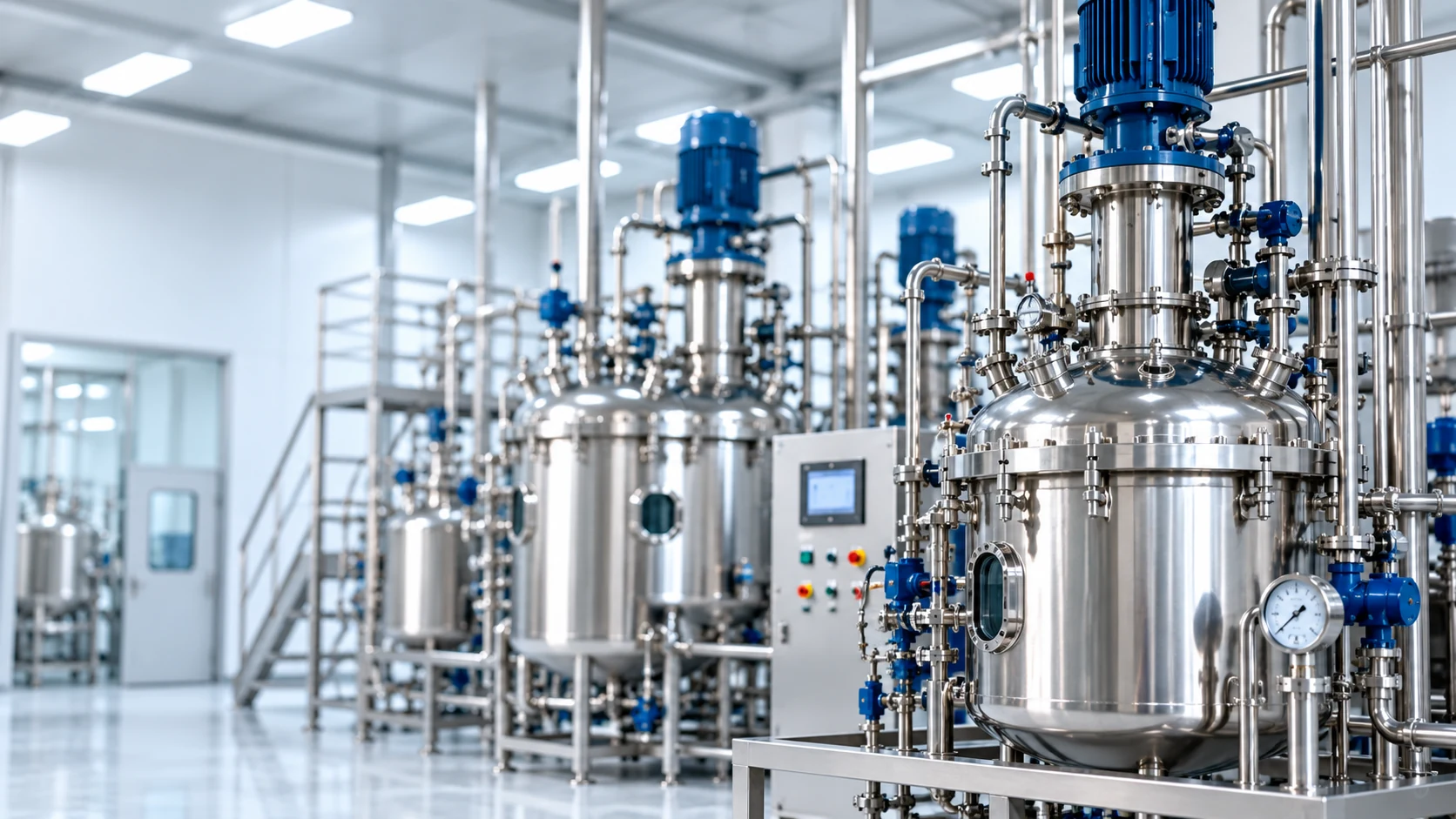
From Polymer Chemistry to Engineered Toner Particles
Toner manufacturing can broadly be approached through mechanical size reduction or chemical particle formation. AIRI TONERS focuses on chemically prepared toner through Emulsion Aggregation, where material chemistry and particle formation are developed as connected stages of the toner system.
- MPT — Mechanically Pulverized Toner: melt-compounding followed by mechanical size reduction and classification
- CPT — Chemically Prepared Toner: toner particles formed through controlled chemical processes, including aggregation and particle formation
- AIRI TONERS: polyester-resin-based toner powder developed through an Emulsion Aggregation route, connecting resin architecture, functional materials, particle structure and application performance
Resin Architecture Built for Toner Applications
Our toner systems are built around polyester resin platforms in which monomer selection and molecular architecture are designed together to influence molecular weight, functionality, thermal behaviour, mechanical response and fusing performance.
- Selected diacid and glycol building blocks for the required resin architecture
- Controlled molecular weight and functionality to balance flow, durability and fusing behaviour
- Branching and molecular architecture designed around application requirements
- Thermal behaviour, melt response and mechanical performance optimized as connected resin properties

Controlled Chemical Particle Formation
Emulsion Aggregation provides a controlled route for forming toner particles by combining resin and functional material dispersions, followed by aggregation and coalescence. The process allows particle growth and final particle structure to be engineered around the required size, morphology and surface characteristics, followed by washing and drying.
- Controlled aggregation and particle growth
- Particle size distribution management
- Morphology development through aggregation and coalescence
- Particle structure engineered for application requirements
Magnetite & Ester-Wax Technology
A toner particle is more than its resin. Functional materials are engineered as part of the particle system, where their interaction with the polymer matrix influences magnetic response, charge behavior, release and fusing performance.
Magnetite Technology
Our magnetite technology is developed for negative-charge monocomponent magnetic toner systems. Attention is given to magnetic functionality, dispersion within the resin matrix, surface characteristics and their relationship with charging and development performance.
Ester-Wax Technology
We use ester-wax technology, including behenyl behenate, to engineer the balance between release behavior, thermal response and fusing performance. Wax selection and its interaction with the resin matrix are considered as part of the complete toner formulation.
Morphology & Size Control
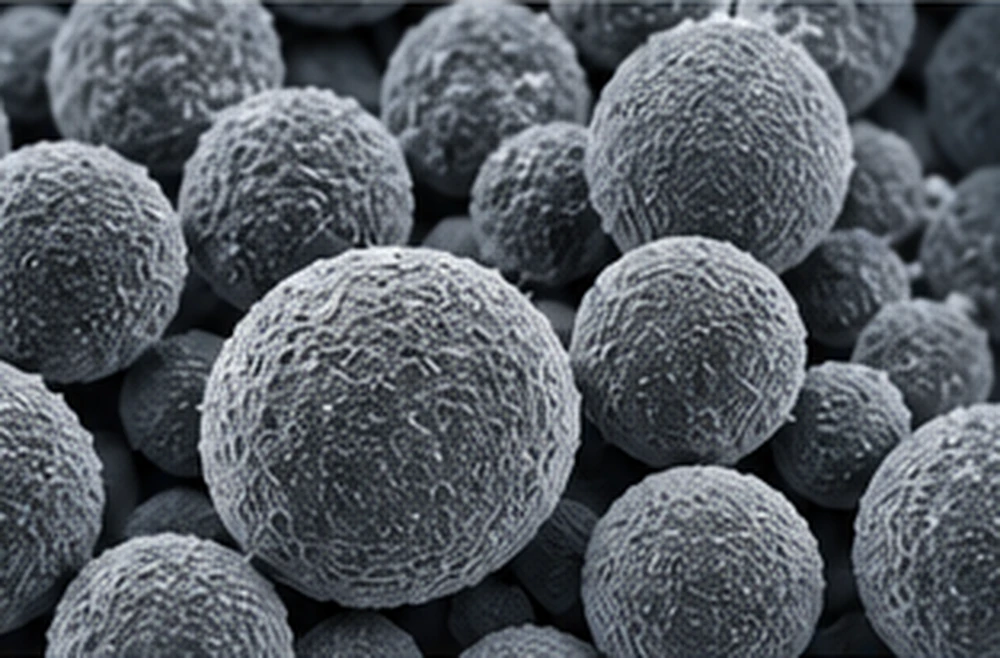
Particle engineering translates formulation and Emulsion Aggregation conditions into the physical structure of the toner particle. Particle size distribution, morphology, surface characteristics and flow behavior are evaluated together because they influence development, transfer, fusing and print consistency.
- D10 / D50 / D90 particle size distribution
- Particle circularity and morphology
- Surface characteristics and flow behavior
- Relationship between particle structure and print performance
- Application-specific evaluation of fusing and transfer behavior
Particle Structure → Application Performance
Particle size and morphology are not treated as isolated specifications. They are evaluated as part of the complete toner system, connecting particle formation with surface behavior, charging, transfer and fusing performance.
Stable Triboelectric Behaviour
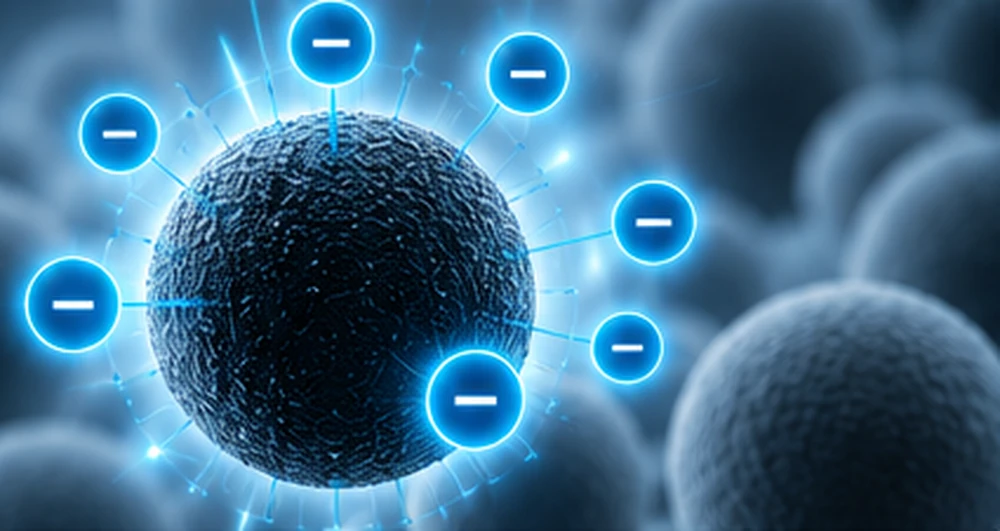
Toner performance depends not only on particle composition, but also on how the particle surface interacts with the printing system. Surface characteristics and charge-control design are evaluated together to support stable triboelectric behaviour and consistent development performance.
Surface & Charge Technology
Our surface and charge-control approach is designed for stable negative-polarity behaviour in applicable toner systems. Evaluation considers surface characteristics, charge response and application-specific Q/M behaviour under controlled test conditions.
- Surface characteristics and treatment
- Triboelectric charge response
- Negative-polarity charge behaviour where applicable
- Q/M evaluation under controlled conditions
- Charge stability and development performance
- Environmental conditioning where required
One Integrated Toner Development Platform
Polyester resin chemistry, functional materials, Emulsion Aggregation, particle engineering and application validation are developed as connected elements of the final toner system.
Tell us what you need
General toner requirement